
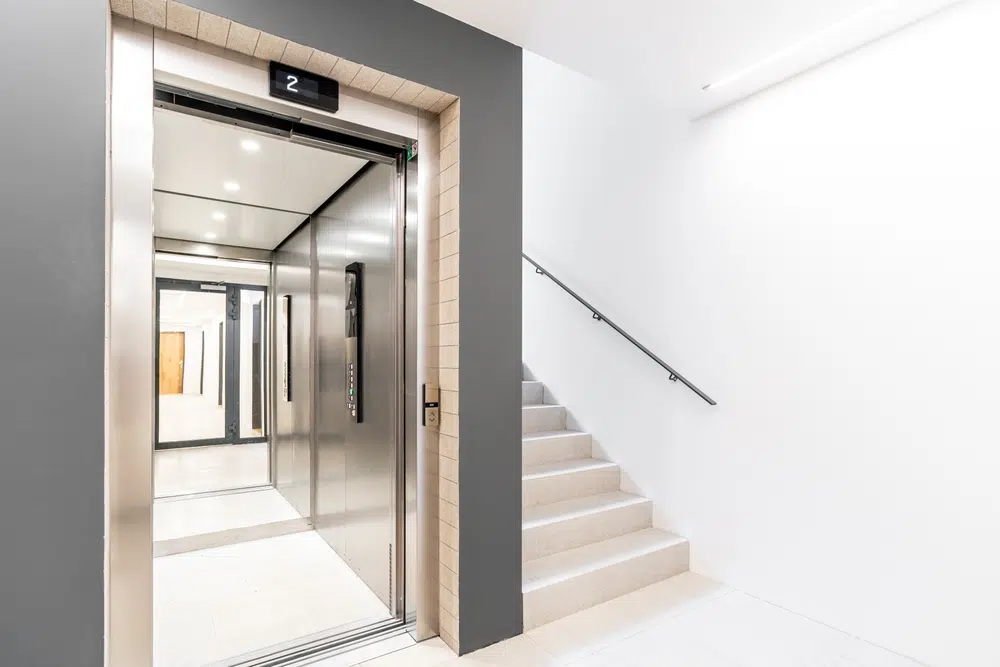
When a lift starts to fail, most building managers face the same question: do you continue repairing individual parts, or is it time to consider lift modernisation?
Piecemeal lift repair can seem like the sensible option. It keeps costs lower in the short term, reduces disruption, and allows you to deal with issues as they appear rather than committing to a full overhaul.
In the right circumstances, that approach can work well. But without a clear strategy behind it, piecemeal lift repair can also become an expensive cycle of reactive maintenance.
So, what is piecemeal lift repair, when is it the right option, and when does it become a false economy?
What is piecemeal lift repair?
Piecemeal lift repair is the process of repairing or replacing individual lift components as they wear out or fail, instead of carrying out a full lift refurbishment or modernisation project.
This might include replacing a worn door operator, upgrading an ageing controller, repairing a failing motor, or dealing with other isolated component failures. Rather than treating the lift as one complete system in need of overhaul, piecemeal lift repair focuses on targeted works to keep the unit operational.
For some buildings, that can be a practical and commercially sensible maintenance strategy. For others, it simply delays a wider problem.
Why do building managers choose piecemeal lift repair?
The main reason is cost. Full lift modernisation requires significant capital investment, while piecemeal lift repair spreads expenditure over time. That makes it attractive for organisations managing tight budgets or balancing multiple asset priorities across a building portfolio.
It can also reduce downtime. If the fault is isolated to one part and the rest of the lift is in reasonable condition, replacing that component is often quicker and less disruptive than taking the lift out of service for a full modernisation programme.
In some cases, piecemeal lift repair is the right call. If the lift remains fundamentally sound, and the issue is limited to a specific component, a targeted repair can restore reliability without unnecessary spend.
When does piecemeal lift repair make sense?
Piecemeal lift repair tends to work best when the lift still has a solid underlying base and the problems are clearly isolated rather than systemic.
It can be effective when there is a known issue with one component, when budgets do not yet allow for full modernisation, or when keeping the lift in service with minimal disruption is a priority. In these situations, planned component replacement can extend the life of the lift and support a more gradual long-term investment strategy.
The key word here is planned. Piecemeal lift repair only works properly when it forms part of a wider lift management strategy, rather than being a series of one-off decisions made under pressure.
What are the risks of piecemeal lift repair?
The risk is not the repair itself. The risk is what happens when piecemeal lift repair becomes the default response to every new issue.
Over time, the lift can become a patchwork of old and new parts. That can create compatibility issues, inconsistent performance, and ongoing reliability concerns. A repair that makes sense in isolation may not make sense when viewed as part of the whole system.
There is also a financial risk. While each individual repair may appear manageable, the cumulative cost of repeated works can become significant. In some cases, building owners end up spending a substantial amount on ongoing repairs without ever improving the overall condition or long-term performance of the lift.
Compliance is another factor. Repairing single components does not necessarily mean the lift meets modern standards or current expectations around safety, performance, and lifecycle planning. A lift may still function, but that does not mean it is operating at the level it should. Lift owners also need to consider wider responsibilities around thorough examination of lifts as part of ongoing compliance.
Is piecemeal lift repair cheaper than lift modernisation?
In the short term, yes, piecemeal lift repair is usually cheaper than full lift modernisation. That is why it is often seen as the more attractive option at first.
The real question is whether it remains cheaper over time.
If breakdowns become more frequent, parts become harder to source, and the lift starts needing repeated intervention across multiple systems, ongoing repairs can quickly stop being cost-effective. At that point, what looked like a saving can become a false economy.
This is why comparing repair costs against modernisation costs should never be done in isolation. You need to look at reliability, downtime, compliance risk, tenant experience, and the expected remaining life of the asset.
How do you know when piecemeal lift repair is no longer working?
There is usually a tipping point, and experienced building managers will recognise the signs.
If repair frequency is increasing, if performance remains inconsistent after works are completed, if maintenance costs continue to rise, or if multiple major components are approaching the end of their service life, then piecemeal lift repair may no longer be the right strategy.
The problem for many property teams is that this point is not always obvious in real time. Individual decisions can seem reasonable month to month, even while the bigger picture is moving in the wrong direction.
That is where many lift strategies begin to drift from proactive asset management into reactive spend.
How can you make piecemeal lift repair part of a smarter lift strategy?
For piecemeal lift repair to deliver real value, it needs to be based on a full understanding of the lift’s current condition.
That means looking beyond the immediate fault and assessing the wider system. Which components are nearing the end of their service life? How reliable is the lift overall? Are repairs improving performance, or simply keeping the lift running for another short period? Are there compliance gaps developing as the system ages?
Once those questions are answered, repairs can be prioritised as part of a broader plan. In some cases, that plan may be to extend the life of the lift for several more years. In others, it may be to manage risk while preparing for modernisation or replacement.
Without that insight, piecemeal lift repair is just guesswork.
Should you repair your lift or plan for modernisation?
There is no one-size-fits-all answer. Some lifts benefit from targeted repairs and continued maintenance. Others are already beyond the point where piecemeal lift repair makes commercial sense.
The right decision depends on the lift’s condition, the age and availability of parts, the pattern of faults, building usage, compliance requirements, and your long-term property strategy.
What matters is not whether piecemeal lift repair is good or bad in principle. What matters is whether it is still the right option for your lift.
Is Piecemeal lift repair for you?
Piecemeal lift repair can be a smart strategy when it is used deliberately, based on evidence, and aligned with a wider plan.
It becomes a costly compromise when it is used reactively, without visibility of the lift’s overall condition or the long-term financial impact.
If you are repeatedly repairing the same lift, or starting to question whether continued repairs still make sense, the most useful next step is to assess the asset properly before more money is spent.
Need clarity on whether piecemeal lift repair is still the right option?
A lift condition survey gives you a clearer picture of your lift’s overall state, the components most at risk, and whether continued piecemeal lift repair is commercially viable.
With that insight, you can make an informed decision on whether to continue repairing, plan for lift modernisation, or prepare for full replacement.
If you want a clearer, evidence-based lift strategy, ILECS can help you assess your current position and plan the most practical route forward.